
De onde vêm os arcos de defeito (AFCI)? São mais perigosos do que pensa!
Parte do princípio de que instalar disjuntores e interruptores de circuitos de falha de terra em casa significa que está completamente seguro? Na realidade, há um "incendiário" mais escondido nos seus circuitos eléctricos - o arco de defeito. Ao contrário das sobrecargas ou das correntes de fuga, não é imediatamente óbvio, mas é frequentemente o culpado pelos incêndios.
I. What is an Arc?
Think of it as electricity taking a “shortcut,” bypassing the normal path and “sparking a flame” in the air. In daily life, it’s often triggered by these causes:
Aging wiring: In older homes, the insulation on wires becomes brittle and cracked. Even slight contact between live and neutral wires can spark.
Loose connections: Repeated plugging/unplugging loosens socket contacts, or loose screws in distribution boxes cause intermittent current flow, sparking arcs.
Internal appliance damage: Aging or faulty internal wiring/components may generate arcs within devices.
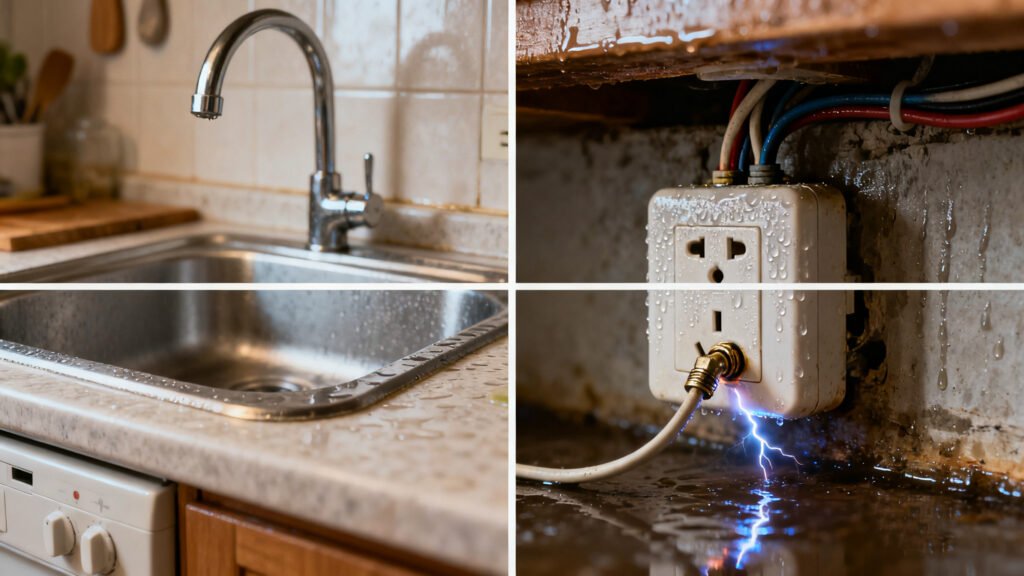
Humid environments: Moisture in bathroom/kitchen sockets or connectors degrades insulation, increasing discharge risks.
II. Two “Invisible” Arcs Ordinary Switches Can’t Prevent
Arcs primarily fall into two categories, one of which is particularly insidious:
Parallel arcs: This occurs when the live wire and neutral wire “short circuit,” creating a high current. Typically, the household circuit breaker will trip, making it relatively easy to detect.
Series arcs: These are the most dangerous! Imagine a wire snapping in the middle, yet current still “jumps” over the tiny break, creating a continuous spark. Since current doesn’t significantly increase, standard circuit breakers and RCDs won’t trip! This tiny arc can reach thousands of degrees, continuously baking the wire insulation and wall insulation until it ignites a visible flame.
III. How Severe Is the Threat? Data Speaks
Statistics show that approximately one-third of electrical fires worldwide are caused by fault arcs. It’s not just about burning out a socket:
High Fire Risk: The intense heat of the arc can directly ignite surrounding electrical conduits, dust, or wooden panels.
Massive Property Loss: A fire triggered by an arc can easily cause tens of thousands or even millions in damages.
Severe safety threats: Endangering lives and property, especially during unattended nighttime hours or in aging facilities, with unimaginable consequences.
Real-world lesson: A warehouse fire was triggered by a series arc within an aging power strip, smoldering for hours before erupting into flames that destroyed all stored goods. Post-incident investigations revealed that installing a dedicated fault arc protection device could have likely prevented this tragedy.
IV. How to Prevent It? You Need an “Arc Detective”
Ordinary circuit breakers cannot prevent arcs, especially series arcs. This requires a professional residual arc fault circuit interrupter (RACC), which acts like a “smart detective” in the circuit, capable of identifying these specific abnormal discharge signals.
Take Jiangguang Electric’s Interruptores de circuito de falha de arco JGAFCI-63 as an example. Here’s how it safeguards safety:
Targets the “Real Culprit”: Precisely identifies both parallel and series arcs, instantly cutting off the circuit before a fire starts.
Smart and Flexible: Offers four sensitivity levels—high, medium, low, and special equipment—adjustable via the SET button (using a pin), adapting to diverse settings like homes, shops, and warehouses.
Clear Status Indication: Operational (RUN light flashes) and fault (ERR light illuminates) are clearly signaled, keeping you informed.
Effortless Installation: Mounts on distribution rails like a standard switch. Simply press the test button monthly to ensure it remains vigilant.
Your Peace-of-Mind Recommendation:
If your home is in an older neighborhood with complex wiring, or if your store/warehouse has numerous appliances and long circuits, we strongly recommend upgrading to install a residual current device (RCD) on critical circuits in your distribution box. Its cost is far lower than the damage caused by a single fire, offering tangible peace of mind.
Safety is no small matter—prevention is key. Adding professional protection to your circuits means adding an extra layer of insurance for your home and property.

